
Care Certificate
The Care Certificate: all 15 standards
- 15 modules
- 12.0 CPD hours
Module 1 free typically about £95 elsewhere
Healthcare assistants
Also called HCAs, nursing assistants, clinical support workers and auxiliary nurses.
A healthcare assistant works under the delegation of a registered professional, usually in a hospital, clinic or GP practice. There is no national register for the role, so the training expectation is set by two things: the Care Certificate at induction, and the employer's own mandatory training matrix, which for NHS employers is normally aligned to the Core Skills Training Framework.
The list below is the set of subjects that appears, with small variations, on almost every NHS and independent sector matrix for this role. The knowledge half of every one of them can be learned here. The practical half of some of them, hoisting a person, performing CPR on a manikin, cannot be, and each of those entries says so plainly.
| Subject | What it is for | Typical refresher | Learn it |
|---|---|---|---|
| The Care Certificate | The agreed induction standard for new support workers in health and social care. | Once, during induction, then kept as evidence | 12.0 hour course |
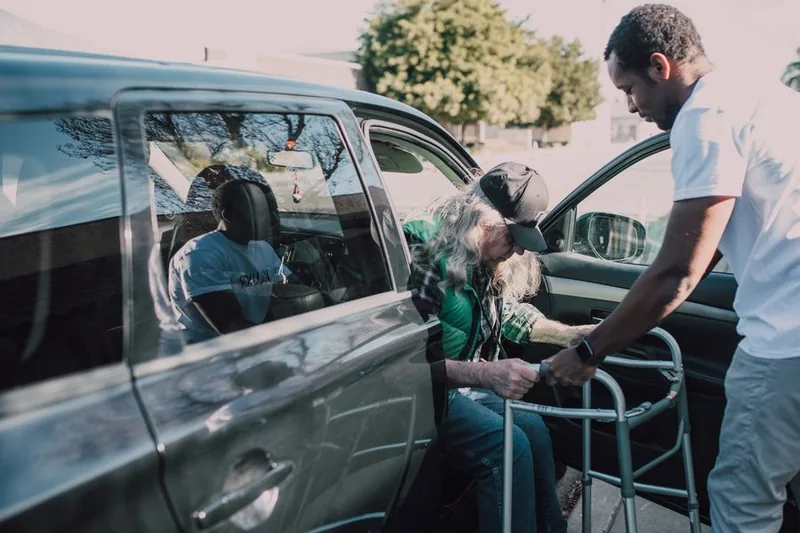
| Moving and handling of people
The practical update, using your employer's own hoists and slides, must be face to face. |
The subject with the highest injury rate in the sector, for staff and for the people they move. | Typically every year | 2.5 hour course |
| Basic life support
Compressions and airway technique are assessed on a manikin, in person. We teach the knowledge that sits underneath. |
Recognising cardiac arrest and acting in the minutes that decide the outcome. | Typically every year | Standard 12 |
| Safeguarding adults | Recognising the ten categories of abuse and knowing exactly what to do about a concern. | Typically every three years | Standard 10 |
| Safeguarding children | Adult services staff still meet children: visitors, young carers, patients' families. | Typically every three years | Standard 11 |
| Infection prevention and control | Standard precautions, hand hygiene, PPE and outbreak response. | Typically every year in clinical settings | 8.0 hour course |
| Fire safety | Evacuation in a building where most people cannot evacuate themselves. | Typically every year | 2.0 hour course |
| Health and safety | Your duties and your employer's under the Health and Safety at Work etc Act 1974. | Typically every three years | Standard 13 |
| Equality, diversity and human rights | The Equality Act 2010 as it lands in real shifts, not as a poster. | Typically every three years | 2.5 hour course |
| Data security and handling information | UK GDPR and confidentiality, in a role that reads and writes care records daily. | Typically every year in the NHS | 2.5 hour course |
| Conflict resolution | De escalation before restraint, in the sector with the highest rate of violence at work. | Typically every three years | 2.5 hour course |
| Preventing radicalisation | The Prevent duty, applied proportionately to health settings. | Typically every three years | 2.0 hour course |
| Mental Capacity Act and DoLS | The law behind every decision made for a person who cannot make it themselves. | Typically every three years | 3.0 hour course |
Refresher intervals are the conventions carried in employer training matrices, not statutory periods. Your own employer's matrix is what an inspector reads. Figures for course length are our declared study hours.
Care Certificate
Module 1 free typically about £95 elsewhere
Statutory and mandatory training

Module 1 free typically about £45 elsewhere
Statutory and mandatory training

Module 1 free typically about £45 elsewhere
Statutory and mandatory training

Module 1 free typically about £45 elsewhere
Employer mandated training

Module 1 free typically about £45 elsewhere
Employer mandated training
Module 1 free typically about £45 elsewhere
Statutory and mandatory training

Module 1 free typically about £45 elsewhere
Statutory and mandatory training

Module 1 free typically about £45 elsewhere
Specialist practice
Module 1 free typically about £75 elsewhere
It is not a legal requirement on the worker, but the Care Quality Commission expects providers to induct new support staff against it, and NHS employers treat it as standard for anyone new to care. In practice a healthcare assistant without it will be asked to complete it in their first weeks.
The knowledge, yes. The practical elements, no, and be wary of anyone who says otherwise. Moving and handling technique and basic life support must be assessed in person, usually annually. Online learning done properly means you arrive at the practical session already understanding why, so the session can concentrate on technique.
Almost no interval is set in law. Employers set refresher periods through their training matrix, typically annually for high risk subjects like moving and handling, life support and fire, and every three years for most of the rest. Your own matrix is the answer that counts at inspection.